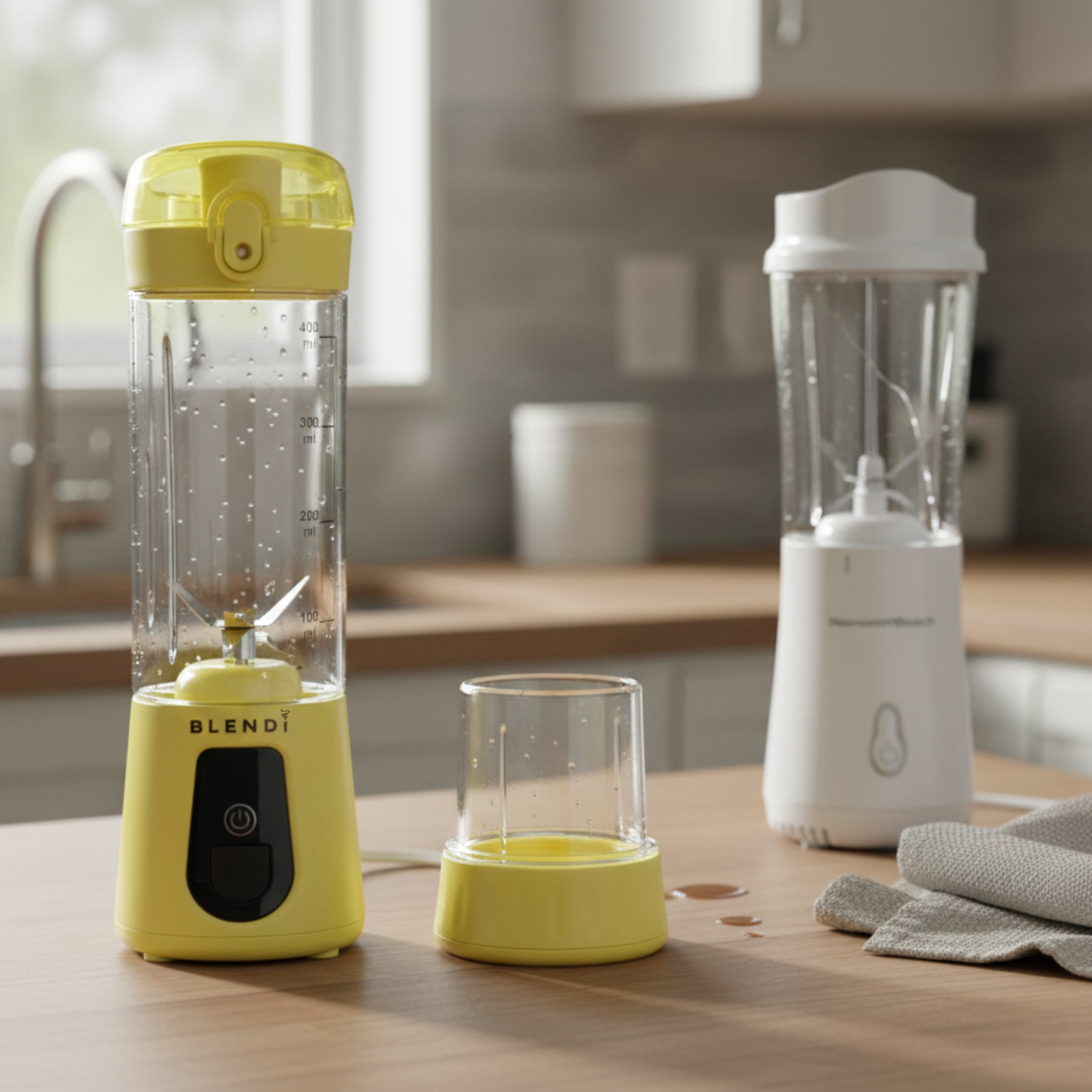
Are portable blenders worth the hype? We analyze the 3 most common disadvantages and how the BLENDi Pro+ was engineered to overcome them.
If you’ve ever bought a cheap "mini blender" from a random ad, you know they aren't all perfect. Most users complain about three things: lack of power, short battery life, and leaks. If you are researching the disadvantages of portable blenders, it’s important to know what separates a toy from a tool.
The 3 Main "Dealbreakers" in Portable Blending:
• Stalling on Ice: Most portables have low-torque motors that stop the moment they hit a frozen strawberry.
• Constant Charging: Many models only last for 2-3 blends before dying.
• The Mess Factor: Poorly designed seals lead to protein shakes leaking inside your expensive work bag.
The BLENDi Solution: We took these disadvantages and engineered them out of the Pro+ model. With a 25,000 RPM motor, a high-capacity battery that lasts for weeks, and a double-silicone seal system, we turned the category's biggest weaknesses into our greatest strengths.
The disadvantage isn't the "portability"—it’s poor engineering. When you choose a professional-grade unit like the BLENDi Pro+, those common frustrations disappear.

0 comments